A weekend bag exposes bad outfit planning fast: one cold morning, one unexpected shower, and suddenly every item feels wrong. The fix is not packing more. It is choosing clothes that can handle temperature changes, walking, sitting, and repeat wear without looking repetitive. These seven spring outfit ideas for weekend getaways use a small color palette, practical layers, and shoes that earn their space.
Start With a Three-Color Travel Palette
My strongest recommendation is to build the weekend around three colors before choosing individual outfits. Spring trips often involve more movement than a normal day at home, so every piece needs to work with at least two others. A simple palette such as navy, cream, and olive gives you enough contrast for photographs while keeping the suitcase under control. Black, white, and denim works too, but it can feel more urban and less relaxed.
Choose one anchor neutral
Begin with one anchor neutral for the largest item in the bag. That might be dark straight-leg jeans, wide-leg trousers, or a midi skirt. Dark denim hides travel wrinkles and minor marks, while trousers create a sharper look for a restaurant or gallery. The Everlane Way-High Jean, often priced around $98, is a useful reference point because its rigid-looking denim can still anchor casual and polished outfits. You do not need that exact pair; the useful features are a clean leg line, a mid-to-high rise, and enough room to sit comfortably for two hours.
Add one light neutral and one accent
Use cream, white, stone, or pale gray for tops and layers. Then add one accent shade such as sage, butter yellow, red, or sky blue. A Uniqlo Linen Blend Shirt, commonly around $39.90, shows why a soft accent or light neutral shirt earns its place: it works open over a tank, buttoned with jeans, or tied at the waist over a dress. Avoid packing three unrelated prints. Prints create outfit limits, while color repetition makes a small wardrobe look intentional.
The verdict is simple: three colors beat five unrelated outfits. Pack pieces that share the same visual language, then change the silhouette or accessories to create variety.
Pack These Five Building Blocks First
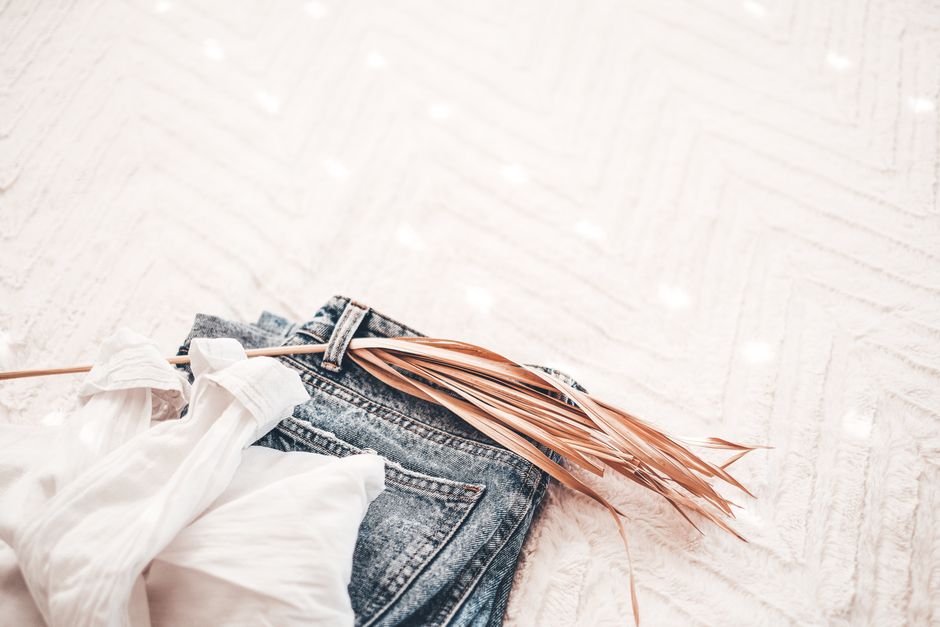
Before planning seven looks, place the foundation pieces on the bed. This order prevents the common mistake of packing outfits that each need a different shoe or jacket.
- One comfortable bottom: choose dark jeans, relaxed trousers, or a skirt with an elastic panel. The fit should work for travel, walking, and dinner.
- Two breathable tops: pack one fitted option and one looser shirt. A fitted tank or ribbed tee balances wide trousers; a loose button-down adds coverage over a slim base.
- One light layer: a cropped cardigan, denim jacket, or thin trench handles chilly restaurants and early mornings.
- One dress or matching set: this creates a complete look without requiring extra styling. Choose a fabric that does not need careful pressing.
- One walking shoe and one flexible second shoe: the second pair should handle dinner, rain, or a dressier plan. If it only works with one outfit, leave it home.
Keep the proportions different. Pair a fitted tank with wide-leg pants, then wear the same tank under an oversized shirt with straight jeans. That small change feels like a new outfit because the shape changes. A belt, silk scarf, or small hoop can finish the look, but accessories should stay limited to two or three pieces.
Do not pack a statement item first. It is the least useful part of a travel wardrobe if the weather changes. Build around comfort and repeat wear, then add one item with personality.
The Best Seven-Look Formula Is Repetition With Better Proportions
The best weekend wardrobe does not create seven unrelated outfits. It creates three strong silhouettes and repeats them with small changes. For a two-night trip, wear the bulkiest shoes and jacket during transit, then pack one bottom, two tops, one dress, and one second shoe. That gives you enough combinations for seven looks without pretending that every outfit needs a new garment. The key is to repeat a color or base item while changing the proportion: slim under loose, short over long, or casual next to polished.
Why the formula works
Clothing feels repetitive when the outline stays the same. A fitted white tee with straight jeans, a fitted white tee with the same jeans, and a fitted white tee with the same shoes will read as one look. The same tee under a long open shirt with the sleeves pushed up creates a different line. Add a belt and change the shoe, and the outfit moves from travel casual to city casual without adding much bulk.
The clear packing verdict
For most weekend trips, the winning formula is one dark bottom, one light bottom or dress, two tops, one shirt-jacket layer, and two pairs of shoes. Seven outfits are possible, but only if the clothes share a palette and the shoes are genuinely versatile. If you need three jackets to make the combinations work, the base wardrobe is too narrow. If you need four pairs of shoes, the plan is too ambitious.
Seven Outfit Ideas for a Two-Night Spring Trip
Use this schedule as a practical starting point. Adjust the fabric weight for your destination, but keep the outfit roles intact.
| Moment | Outfit formula | Why it earns suitcase space |
|---|---|---|
| Travel day | Relaxed trousers, fitted tee, open button-down, walking sneakers | Comfortable for transit and easy to remove in warm cabins |
| First afternoon | Dark jeans, striped knit, light jacket, crossbody bag | Casual enough for sightseeing and polished in photos |
| First dinner | Slip dress, cropped cardigan, low block heel or sleek flat | One-piece dressing with a warm layer for cool evenings |
| Second morning | White shirt, straight jeans, loafers, small scarf | Clean lines for breakfast, markets, or museums |
| Second afternoon | Tank, wide-leg trousers, shirt worn open, sneakers | Breathable and comfortable for long walking distances |
| Second dinner | Dark jeans, tank, blazer-style jacket, simple earrings | Uses a repeated base with a sharper top layer |
| Return trip | Dress worn over a tee, cardigan, walking shoes | Creates a fresh shape while keeping the same core pieces |
The table works because no look requires a single-use item. The slip dress can become a daytime piece with a tee underneath. The button-down can act as a sun layer. The cardigan can soften jeans or make the dress practical after sunset. For footwear, Veja Campo sneakers often cost about $175, while a simple leather loafer may cost more but cover dinners and city walking. Pick the sneaker if your trip is walk-heavy; pick the loafer only when the itinerary includes dressier plans.
What Should You Wear When Spring Weather Changes Fast?
What works for a cool morning?
Start with a thin base layer, a shirt or cardigan, and a jacket that blocks wind. Three light layers are easier to manage than one heavy sweater. A ribbed tank under a cotton shirt gives you options when the temperature rises, while a thin scarf adds warmth without taking much room. Avoid relying on a chunky knit as your only cold-weather plan. It takes up space and becomes uncomfortable on public transport.
What works for a warm afternoon?
Choose breathable fabrics and sleeves you can roll. Cotton poplin, linen blends, lightweight denim, and fine-gauge knits all handle mild spring heat better than thick polyester. The goal is airflow, not a completely sleeveless outfit. A loose shirt protects your arms from sun and can cover a top that feels too casual for a café or shop.
What works for rain?
Rain exposes weak shoe choices first. Canvas sneakers may dry slowly, and suede can stain badly after one wet afternoon. Pack a compact umbrella if rain is likely, and choose leather or treated textile shoes with a sole that grips. A short water-resistant jacket beats a delicate blazer when the forecast looks uncertain. The practical verdict: prepare for the wettest likely hour, not the most attractive forecast screenshot.
Common Weekend Outfit Mistakes That Make Packing Harder
The most common mistake is planning around photographs instead of movement. A beautiful outfit that requires constant adjusting is a poor travel outfit. Test every look by sitting, walking up stairs, and wearing the planned bag over one shoulder.
- Overpacking delicate fabrics: silk and thin viscose can look excellent but wrinkle quickly. Pack one delicate piece, not a full delicate wardrobe.
- Choosing shoes by appearance alone: break in walking shoes before the trip. New loafers or sandals can ruin the second day.
- Ignoring bag weight: a large leather tote may match everything, but it becomes tiring after hours of sightseeing. The Baggu Medium Nylon Crescent Bag, usually around $58, is a useful example of a lighter casual shape; choose a similar size that holds your phone, wallet, sunglasses, and a small layer.
- Packing for an imaginary event: if the itinerary has no formal dinner, a highly structured dress and special heels waste space. A simple Quince washable silk slip dress, often around $79.90, has more value because it can dress up or down.
- Forgetting the base layer: low-cut tops and stiff waistbands become frustrating during travel. A smooth tank and comfortable waistband can save an outfit.
Do not buy a new item just because the trip feels like a reason to shop. Buy only if the piece solves a clear gap: weather protection, walking comfort, or a missing dress level. For most travelers, a versatile layer is a better purchase than another eye-catching top.
Which Outfit Should You Choose for Your Destination?
Choose the silhouette that matches the trip, not a trend you will fight all weekend.
For a walkable city
Pick dark jeans or relaxed trousers, a fitted tee, an open shirt, and supportive sneakers. This is the strongest choice for museums, train stations, and neighborhoods where the itinerary changes by the hour. Keep the colors quiet and let one scarf or bag provide contrast.
For a coastal town
Choose a slip dress, flat sandals or sneakers, and a cropped cardigan. Add a loose shirt for sun and wind. A dress gives you an easy evening outfit, while the shirt makes it less exposed during daytime walking.
For a countryside stay
Wear straight jeans, a fine knit, a weather-resistant jacket, and shoes with traction. Skip delicate heels and very wide trousers that drag through wet paths. A refined knit or small earrings can keep the outfit attractive without making it fragile.
The final comparison is clear: sneakers win for distance, loafers win for polished city plans, and weather-resistant shoes win when the forecast is unreliable. The best spring wardrobe is the one that lets you keep moving, stay warm when needed, and repeat pieces without looking as though you packed at the last minute.
Related Posts

Cashmere Sweater Vs Merino Wool: Cashmere vs Merino Wool: The Better Fall Sweater
The Warmth Myth: Cashmere Does Not Automatically Win You leave…

Ministry of Supply vs Athleta: Best Hybrid Workwear
Hybrid office dressing has one awkward demand: your clothes must…