Want three necklaces to look intentional instead of tangled? Start with spacing, then add contrast. The polished stack is not the one with the most jewelry. It is the one where every chain has a job.
Start With Spacing, Not More Jewelry
The strongest necklace layers create visible steps from the collarbone downward. If two pendants sit at the same point, they merge into one messy shape. If every chain is delicate and the same color, the stack disappears. Build a clear path for the eye.
Use the 16-18-20 rule
Begin with a 16-inch chain that sits close to the neck. Add an 18-inch necklace for the middle line, then finish with a 20- or 22-inch pendant. This two-inch gap gives each piece room. A 14-inch choker can replace the 16-inch chain, but leave at least two inches before the next necklace.
Neck size changes the result. If you have a fuller neck or prefer a looser fit, shift the stack to 18, 20, and 24 inches. Measure a necklace with a soft tape before buying. Guessing creates most layering mistakes.
Leave one visible gap
The gap between the first and second necklace matters more than the gap between the second and third. Keep roughly one finger of bare skin between chains. That small break makes the set look styled rather than accidental. High necklines need longer chains, while a scoop neck gives you more room near the collarbone.
Choose One Anchor and Build Around It
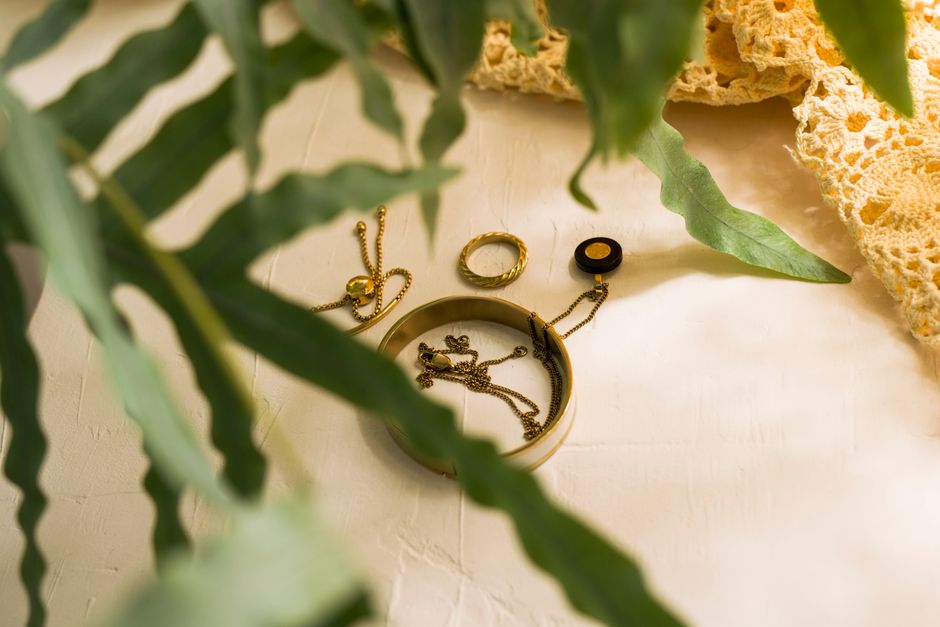
Pick one focal necklace first. That is the piece people should notice from across the room. Every other chain should support it, not compete with it. This rule keeps a layered look sharp when your outfit already has strong details such as a printed blouse, a satin neckline, or large earrings.
Match the pendant to the neckline
A pendant should land on fabric or bare skin with purpose. For a crew-neck T-shirt, use a 20- to 24-inch pendant that falls below the collar. For a V-neck, choose a pendant that follows the V without ending several inches above it. A square neckline works best with a short chain near the collarbone and one longer, simple line below.
Do not place a large pendant directly beside another large pendant. The shapes fight for attention. Pair a bold medallion with a plain curb or box chain instead. The chain provides structure while the pendant provides character.
Control metal, texture, and scale
Mixed metals can look polished, but they need a bridge. Use one two-tone piece, a watch, or small earrings that repeat both colors. Without that bridge, gold and silver can look like separate outfits.
Vary texture in a controlled order: fine cable chain, medium box chain, then a pendant or textured link. Keep only one chunky piece in the stack. Three thick chains crowd the neckline and make even expensive jewelry look busy. The best default is two fine chains plus one medium-weight focal piece.
These Necklace Lengths Work Best Together
Use this chart before you shop. The measurements create breathing room, while the examples show how different chain weights can share one stack. Prices are typical US list prices and may change with seasonal updates.
A practical length and weight chart
| Layer | Best length | Visual role | Example |
|---|---|---|---|
| First | 16 inches | Frames the collarbone | Catbird Sweet Nothing Chain, about $128 |
| Second | 18-20 inches | Adds texture without taking over | Ana Luisa Curb Chain Necklace, 18 inches, about $75 |
| Third | 20-24 inches | Creates the focal drop | Missoma pendant necklace, about $175-$200 |
| Optional fourth | 24-28 inches | Works over knitwear | Mejuri Bold Box Chain Necklace, about $198 |
The best first stack for beginners
For a simple daily stack, choose a 16-inch fine chain, an 18-inch medium chain, and a 20-inch pendant. The Ana Luisa Curb Chain adds enough shine to keep the first two layers from looking flat. The Catbird Sweet Nothing Chain works well as the close-fitting base because its fine profile does not overpower a pendant.
My pick for a polished office look is the Catbird chain, a plain 18-inch box or curb chain, and a small Missoma pendant. The proportions are easy to repeat with T-shirts, button-down shirts, and open blazers.
Build the Stack in Five Controlled Steps

Do not clasp every necklace while it hangs around your neck. Lay the pieces on a flat surface first, then adjust the order. This takes less than two minutes and saves you from solving a knot beside the front door.
Follow this order
- Sort by length. Place every necklace from shortest to longest. Remove any pieces that land within one inch of each other.
- Choose the anchor. Pick the pendant or textured chain that should draw attention. Put it on the longest line.
- Balance the weight. Add a fine chain at the top and a medium chain in the middle. Keep heavy links away from the neck.
- Check the neckline. Put on the actual top or dress. A stack that looks good over a tank may vanish under a crew neck.
- Test movement. Turn your head, bend forward, and walk. If the chains twist immediately, change the order or remove one layer.
Use a connector only when needed
A necklace separator or layering clasp can keep two chains apart, but it should not rescue a bad combination. Use one when two pieces have similar lengths and are difficult to space by design. Do not add a connector to four heavy necklaces. The extra hardware creates weight at the clasp and can pull delicate chains out of shape.
For most people, three necklaces are the winning number. Add a fourth only over a thick sweater, and make that fourth chain the simplest piece in the group.
Why Do Necklace Layers Tangle or Look Cheap?
Most problems have a clear cause. Fix the cause before buying another necklace.
Why do my necklaces keep tangling?
Chains tangle when they share the same length, weight, or movement pattern. A fine chain beside a heavy pendant can wrap around the pendant loop. Two lightweight chains can also twist if they are only half an inch apart. Increase the spacing to two inches, reverse the order, or remove the chain that moves the most.
Can I mix gold and silver?
Yes, but add a link between them. A two-tone watch, mixed-metal pendant, or pair of earrings can connect the colors. My verdict: use gold as the dominant metal and silver as the accent if your clothes already contain warm tones. Reverse that order with cool gray, navy, or icy pink outfits.
When should I skip layering?
Skip a busy stack with a high-neck blouse, statement collar, or large beaded neckline. The jewelry will compete with the clothing. A single 20-inch pendant is better over a patterned dress, while small hoop earrings can supply enough shine near the face.
The Polished Stack Needs Less Than You Think

Three well-spaced necklaces beat five random ones. That is the rule to keep for 2026 and beyond. The goal is not to display every favorite piece at once; the goal is to give one outfit a clean vertical line.
Choose the right stack for the setting
For work, wear two thin chains and one small pendant. For a casual weekend outfit, add a textured middle chain or a short initial necklace. For evening, keep the lengths clear and let one polished pendant do the work. The more detailed the clothing, the simpler the necklace stack should be.
Take off any piece that catches on your collar, scratches your skin, or turns backward every few minutes. Comfort is part of polish. Jewelry that needs constant fixing makes the outfit look unfinished.
Return to the opening problem
So, how do you make three necklaces look intentional? Start with 16, 18, and 20 inches, choose one anchor, vary the chain weights, and test the stack with the clothes you will actually wear. If the chains still tangle, remove one. The cleanest answer is often the necklace you leave out.
Related Posts
How to Build Timeless Denim Jacket Outfits That Work for Any Season
Many people assume a denim jacket is a weekend-only piece,…
Target A New Day Vs Old Navy Denim: 5 Target’s A New Day vs Old Navy Denim Myths That Cost You Money
Cheap jeans are not automatically bad jeans. That is the…

Best Plus Size Jeans for Apple and Pear Shapes in 2026
Two pairs of jeans with the same labeled size can…