Are you tired of cold, wet feet ruining your winter? I’ve been there. For years, I just bought whatever winter boots were on sale, thinking “they’re all pretty much the same.” That was a huge mistake. After countless freezing mornings, slushy commutes, and near-slips on ice, I learned that good winter boots aren’t a luxury; they’re a necessity. And picking the right ones, like assessing a Hoka winter boots review, is more complex than you think. You need to understand insulation, traction, and fit. Otherwise, you’re just throwing money away.
Choosing the Right Insulation for Your Winter Adventures
Many people grab a boot, see a temperature rating like “-20°F,” and think they’re set. That’s a trap. A temperature rating is only half the story. It assumes you’re active, generating heat, and that the insulation is dry. If you’re standing around, or if the boot gets wet, those numbers mean nothing. I’ve found that understanding the actual insulation materials and how they perform in various conditions is far more critical than any arbitrary number on a tag.
Understanding Fill Power vs. Temperature Ratings
When you see insulation, you’ll typically encounter synthetic fibers or, less commonly in boots, down. Synthetic insulation, like Primaloft or Thinsulate, is measured in grams per square meter (g/m²). For example, a boot might boast 200g Thinsulate. This tells you the density of the insulation. More grams usually means more warmth. But here’s the kicker: synthetic insulation performs better when wet than down. Down, used more in jackets, loses virtually all its insulating power once it gets damp. For boots, where snow and slush are inevitable, synthetics are generally a safer bet. A boot with 400g of quality synthetic insulation is a good starting point for truly cold days, say below 20°F (about -7°C), especially if you’re not moving constantly.
Synthetic vs. Down Insulation for Wet Conditions
In the world of winter boots, almost all effective insulation is synthetic. Brands like Hoka, Merrell, and Sorel typically use Primaloft or similar proprietary synthetic blends. These materials are engineered to trap air even when compressed or slightly damp. This is why you rarely see down-insulated winter boots. If you plan on trudging through deep snow or slush, you need a boot where the insulation’s integrity isn’t compromised by moisture. A boot’s shell and waterproofing are the first line of defense, but if moisture does get in, synthetic insulation will still offer some warmth. I’ve had boots with inadequate waterproofing fail, but thanks to decent synthetic insulation, my feet didn’t instantly turn into ice blocks. It’s a critical fallback.
When Waterproofing Matters More Than Warmth
This is my number one rule: waterproofing. You can layer socks for warmth, but you can’t make a wet boot dry in the field. Nothing makes your feet colder faster than being wet. Look for boots with a genuine waterproof membrane, like Gore-Tex. Many brands claim “water-resistant” or “waterproof construction,” but that’s not always the same as a full waterproof liner. A quality Gore-Tex membrane, often found in boots like the Hoka Kaha 2 GTX or some Merrell models, means a higher degree of confidence in slush and rain. Prioritize this feature, especially if you live in an area with freeze-thaw cycles and lots of wet snow. A slightly less insulated, but genuinely waterproof boot will always keep your feet warmer than a heavily insulated boot that leaks.
My Hard-Earned Lessons on Winter Boot Traction

I’m going to be blunt: a boot without good traction on ice and packed snow is a death trap. I’ve learned this the hard way, slipping on black ice more times than I care to admit. Many boots look aggressive, but their sole compounds are useless in truly slick conditions. Don’t fall for marketing hype; look for specific technologies and materials. Your winter boot’s outsole is not just about aesthetics; it’s about staying upright.
Why Lug Depth Is Non-Negotiable
Lug depth and pattern are crucial for snow. Deeper, multi-directional lugs — the raised bits on the sole — will bite into soft snow and provide stability. Think of them like tire treads. If you’re regularly walking through more than a couple inches of snow, you need lugs that are at least 4-5mm deep. Boots like the Sorel Caribou, for instance, have a classic, deep lug pattern that excels in soft, powdery, or even packed snow. Flat, shallow patterns might look sleek, but they’ll turn into skis on anything but dry pavement. I always check the outsole photos before buying. If the lugs look more decorative than functional, skip it.
The Unexpected Grip of Vibram Arctic Grip
Here’s my strong recommendation for ice: get a boot with Vibram Arctic Grip. Period. I’ve tried countless soles over the years, and nothing comes close to Arctic Grip on wet ice. It’s a . It uses a unique rubber compound with specific texture inclusions that physically adhere to wet, slippery ice. Boots featuring this, like the Merrell Moab Speed Thermo Mid Waterproof, offer a noticeable increase in confidence on icy sidewalks or trails. It’s not magic; you can still slip, but it dramatically reduces the likelihood. If your winter involves icy conditions, prioritize this technology. It’s worth the extra cost.
Don’t Trust Anything Less Than X-Grip
Beyond specific Vibram compounds, pay attention to the overall rubber formulation. Some budget boots use hard, plastic-like rubber that becomes even harder and slicker in freezing temperatures. Look for softer, more pliable compounds that stay flexible in the cold. Brands often have proprietary names for these, like “Winter Grip” or “Ice-Trek.” My rule of thumb: if the boot doesn’t explicitly state an advanced sole technology designed for cold or ice, assume it’s just standard rubber and won’t perform well when things get slick. I’ve found that even some reputable brands cut corners here on their cheaper models. My advice? If it doesn’t say Vibram Arctic Grip or a similar high-performance cold-weather compound, you’re taking a risk.
Hoka Winter Boots: Do They Actually Deliver?
I get asked constantly about Hoka boots for winter. People love Hoka’s cushioning for running, and they wonder if that comfort translates to winter warmth and grip. My experience? It depends heavily on the specific model and your expectations. Hoka excels in lightweight cushioning, but true winter performance requires different priorities. Let’s break down my findings from using a couple of their popular models in colder conditions.
Are Hoka Winter Boots Warm Enough for Sub-Zero?
For me, the Hoka Kaha 2 GTX ($240) is generally warm enough for mild winter days, say down to 20-25°F (-7 to -4°C) if I’m active. It uses a Gore-Tex membrane, which helps with wind and moisture, and has decent insulation for a hiking boot, but it’s not designed for extreme sub-zero temperatures like a dedicated winter pac boot. The plush cushioning certainly adds a layer of insulation from the frozen ground, which is a nice touch. However, if you’re standing around in 0°F (-18°C) for extended periods, your toes will likely get cold. I found the Anacapa Mid GTX ($185) to be even less insulated, making it really more of a shoulder-season boot than a true winter option for anything consistently below freezing. They simply don’t pack the grams of insulation you find in a Sorel Caribou or a Columbia Bugaboot.
How Do Hoka Boots Handle Ice and Slush?
This is where Hoka boots, specifically the Kaha 2 GTX with its Vibram Megagrip outsole, are a mixed bag. On dry snow and even some packed snow, the deep lugs of the Kaha 2 GTX perform quite well. The traction is reliable for hiking trails. However, on wet ice or slick, hard-packed snow, the Megagrip compound, while excellent for hiking, is not comparable to dedicated winter rubber like Vibram Arctic Grip. I’ve definitely felt less secure on icy patches in my Kaha 2 GTX than in boots specifically engineered for ice. For slush, the Gore-Tex membrane performs as expected, keeping my feet dry as long as the water doesn’t go over the top of the boot. But for serious icy conditions, I wouldn’t pick a Hoka over an Arctic Grip boot.
What’s the Real-World Durability of the Kaha 2 GTX and Anacapa Mid GTX?
Durability has been a strong point for my Hoka boots. The Kaha 2 GTX, after two winters of regular use (hiking, city walking, light snow shoveling), has held up impressively. The uppers show minimal wear, and the Gore-Tex membrane is still waterproof. The outsole, while not ideal for ice, has worn down evenly. The plush cushioning, which is a hallmark of Hoka, has maintained its responsiveness. The Anacapa Mid GTX, which I used more in slushy shoulder seasons, also proved durable. The quality of construction on both models is solid. Hoka isn’t cutting corners on materials, which is good to see in a boot that you expect to last several seasons, especially at their price point.
My Top 3 Winter Boots for Different Scenarios (And What to Avoid)

After years of trying on, wearing out, and ditching dozens of pairs, I’ve narrowed down my recommendations based on specific needs. You won’t find one boot that does everything perfectly. It’s about matching the boot to your most common winter conditions. And I’ll tell you exactly what to skip.
- Best for Light Snow & City Use: Merrell Moab Speed Thermo Mid Waterproof ($170)
- Why I like it: This boot hits a sweet spot. It’s surprisingly lightweight, comfortable for all-day wear, and critically, often features Vibram Arctic Grip for excellent traction on ice. The M-Select DRY membrane keeps slush out. It’s insulated with 200g of Primaloft, which is enough for most urban winters down to 15°F (-9°C) if you’re moving. It looks decent enough for casual wear.
- What to avoid instead: Don’t buy cheap fashion boots that look similar but lack brand-name insulation and a true waterproof membrane. They might save you $50 upfront but will leave your feet cold and wet after a single encounter with slush. Also, avoid any boot that claims “grip” without specifying a dedicated ice-tread technology; they’ll let you down.
- Best for Heavy Snow & Trail: Hoka Kaha 2 GTX ($240) OR Salomon Toundra Pro CSWP ($200)
- Why I like them: For active days in deeper snow, the Hoka Kaha 2 GTX offers exceptional cushioning and decent traction in snow, along with reliable Gore-Tex waterproofing. Its generous stack height keeps your feet further from the cold ground. However, if you’re venturing into truly extreme cold and deeper snow, the Salomon Toundra Pro CSWP is a beast. It’s bulkier but offers a -40°F rating, a strong protective upper, and excellent grip in snow. The Salomon uses Aerotherm Aerogel insulation which is incredibly effective.
- What to avoid instead: Don’t opt for lightweight hiking boots that aren’t specifically winterized. Even if they have Gore-Tex, they often lack sufficient insulation, and their outsoles might not handle packed snow or ice well. A standard hiking boot is not a winter boot. Also, boots that claim extreme cold ratings without substantial, visible insulation are often exaggerating.
- Best for Extreme Cold & Ice: Sorel Caribou ($180)
- Why I like it: This is a classic for a reason. With its removable 9mm felt inner boot, vulcanized rubber shell, and waterproof full-grain leather upper, the Caribou is practically bomb-proof for cold, wet, snowy conditions. It’s rated to -40°F (-40°C) and I believe it. While it’s heavier and bulkier than other options, for standing in extreme cold or shoveling deep snow, it’s unmatched. The traction in deep snow is excellent, though it’s just okay on slick ice (not Arctic Grip level).
- What to avoid instead: Anything that tries to look like a Sorel Caribou but is a cheap knock-off. These often have flimsy rubber shells that crack in the cold, thin felt liners, and poor quality uppers that leak. The genuine Sorel Caribou is an investment that lasts for years; cheap imitations are a waste of money.
The Overlooked Secret to Warm Feet: Socks and Lacing
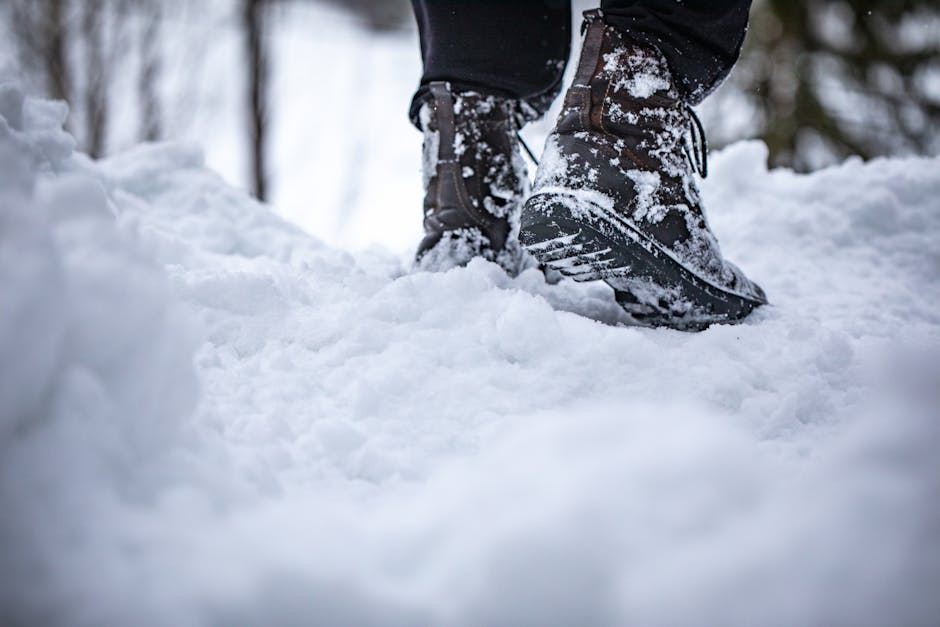
You can buy the most expensive, most insulated, most waterproof winter boots on the market, but if you don’t manage what’s happening inside them, your feet will still get cold. I’ve seen people spend hundreds on boots only to complain about frozen toes, simply because they ignored the basics of foot care in winter. This isn’t just about comfort; it’s about preventing frostnip.
Layering Socks for Optimal Warmth
Layering socks isn’t just for fashion; it’s a science. My go-to strategy involves two layers: a thin liner sock and a thicker outer sock. The liner sock, ideally made of a synthetic blend or thin merino wool, wicks moisture away from your skin. This is critical because damp feet get cold fast. The outer sock, a medium-to-heavyweight merino wool, provides the bulk of the insulation. Merino wool is excellent because it retains warmth even when slightly damp and doesn’t get scratchy. Avoid cotton socks entirely in winter. Cotton absorbs moisture and holds it against your skin, basically creating an ice pack around your foot. If you’re going to be out for hours in truly frigid temperatures, consider a very thick mountaineering-grade merino sock. I typically use a Smartwool or Darn Tough liner with a heavier Smartwool full-cushion hiking sock.
The Right Way to Lace for Circulation
Most people just crank down their laces, thinking tighter means more support or warmth. Wrong. Over-tightening your boots, especially around the ankle and top of your foot, restricts blood flow. Good circulation is absolutely essential for warm feet. You want your boots to be snug but not constricting. I often use a lacing technique where I keep the lower sections relatively loose to allow foot splay, then snug up the ankle for support, and slightly loosen the very top eyelets if I feel any pressure points. Experiment with different lacing patterns. Some people skip an eyelet at the flex point. The goal is to keep your foot secure without cutting off the warmth-carrying blood supply. If your toes start to tingle, your laces are probably too tight.
When to Ditch Cotton Entirely
This is probably the single most important sock rule for winter: cotton is the enemy. I mentioned it earlier, but it bears repeating. Cotton absorbs sweat like a sponge, then loses all its insulating properties. Once your cotton socks are damp from sweat, they will actively draw heat away from your feet, making them feel much colder than the ambient temperature. This isn’t just uncomfortable; it’s dangerous in extreme cold. Always choose wool (especially merino) or synthetic blends for winter socks. They wick moisture effectively and retain warmth even when damp. Invest in a few good pairs of merino wool socks; they’re worth every penny for winter comfort and safety.
Ultimately, a good winter boot is an investment in your comfort and safety. Don’t cheap out, and don’t assume any old boot will do. For all-around winter performance in varied conditions, I confidently recommend the Merrell Moab Speed Thermo Mid Waterproof with Vibram Arctic Grip. It’s comfortable, genuinely waterproof, and offers unmatched traction on ice for its price point.
Related Posts
Huda Beauty Easy Blur Foundation Review
[unpaid/sample/affiliate/ad] I completely rejected the idea of ‘baking’ as a…
Guerlain KissKiss Bee Glow Oil in Poppy Glow
[unpaid/sample/affiliate/ad] This is a very quick catch up post because…
Germaine de Capuccini Repair Night Progress
There’s a lot to like about Spanish brand Germaine de…