How do you wear wide-leg trousers to the office without looking sloppy, overly formal, or swallowed by fabric? The answer comes down to controlled proportions, a clean hem, and enough structure in the rest of the outfit to balance the relaxed leg. Wide trousers can look sharper than skinny pants when the waist sits correctly and the fabric falls in one unbroken line. They also offer more comfort during long desk days, commuting, and meetings. The guide below focuses on practical styling decisions rather than trend rules, so you can build business casual outfits that look intentional in 2026 and still work next season.
What Makes Wide-Leg Trousers Office-Appropriate?
Wide-leg trousers belong in a business casual wardrobe when their shape looks deliberate. The leg should be roomy from the hip or upper thigh, but the waistband must sit neatly against the body. A soft, puddled pair can work for weekends, yet most offices call for trousers that hold a clean line from the waist to the shoe. The difference is not simply the width. It is the quality of the fabric, the finish of the waistband, the rise, and the length.
Start with the rise and waistband
A mid-rise or high-rise waist usually gives wide trousers a stronger office shape. The waistband should lie flat without folding, gaping, or cutting into your stomach when you sit. A front pleat is useful when it opens from the waist and falls flat below the hip. Several small pleats or excess gathering can add bulk where you want the outfit to look clean. For most business casual settings, a flat-front or single-pleat trouser is the safest starting point.
Use the hem as a boundary
The hem should nearly touch the top of the shoe while leaving the toe visible. That small boundary keeps the trousers from looking like loungewear. A full-length hem works well with a low block heel, pointed loafer, or slim boot. Cropped wide-leg trousers can also work, but they need a deliberate ankle gap and a polished shoe. The strongest office verdict is simple: choose a full-length pair if you want the easiest route to a professional finish.
How Do You Balance Volume Through the Outfit?
Wide trousers create visual volume below the waist, so the upper half needs a clear shape. This does not mean wearing tight clothing. It means showing where the torso ends and the trousers begin. A tucked shirt, cropped jacket, or defined shoulder gives the eye a starting point. A long, loose top over wide trousers can hide the waist and make the whole outfit look larger than planned.
Choose one clear waist treatment
- Tuck a fine knit or button-down fully into the waistband for the cleanest proportion.
- Use a half-tuck only when the front of the shirt is thin enough to lie flat.
- Wear a cropped cardigan or jacket that ends near the waistband to create a visible visual break.
- Add a narrow leather belt when the trousers have belt loops and the top does not cover them.
Control the shoulder line
A defined shoulder helps wide trousers look tailored rather than oversized. Try a blazer with a modest shoulder pad, a fitted cardigan, or a crisp shirt with a structured collar. Avoid pairing a very wide leg with a very dropped shoulder, long hem, and bulky sleeve unless the office has a creative dress code. That combination can erase the body’s shape. The best everyday choice is a relaxed top with one firm detail, such as a collar, shoulder seam, or smooth waistband.
Color can also restore balance. A darker trouser with a lighter top draws attention upward, while a tonal outfit creates a longer vertical line. Both work, but the tonal option looks more refined when the trousers are especially wide.
Which Shoes Work With Wide-Leg Trousers?
Verdict: a pointed or almond-toe shoe with a low heel is the most reliable office pairing because it keeps the foot visible and gives the trouser hem a clean landing point.
Match the shoe to the hem
| Shoe type | Best trouser length | Useful heel height | Office result |
|---|---|---|---|
| Pointed-toe loafer | Full length, just above the floor | 0.5 to 1 inch | Sharp and practical for commuting |
| Block-heel pump | Full length with a slight break | 1.5 to 2.5 inches | Best for a dressier meeting day |
| Sleek ankle boot | Full length or 1 inch above the floor | 1 to 2 inches | Strong choice for cool weather |
| Minimal leather sneaker | Cropped or ankle-skimming | Flat | Works in relaxed creative offices |
Match the trouser color to the shoe when you want extra length. Black trousers with black loafers create a single line, while cream trousers with tan shoes keep the outfit lighter. Avoid a chunky sneaker with a very fluid trouser unless the upper half is structured enough to handle the visual weight. The shoe should support the shape, not compete with it.
What Are the Best Business Casual Outfit Formulas?
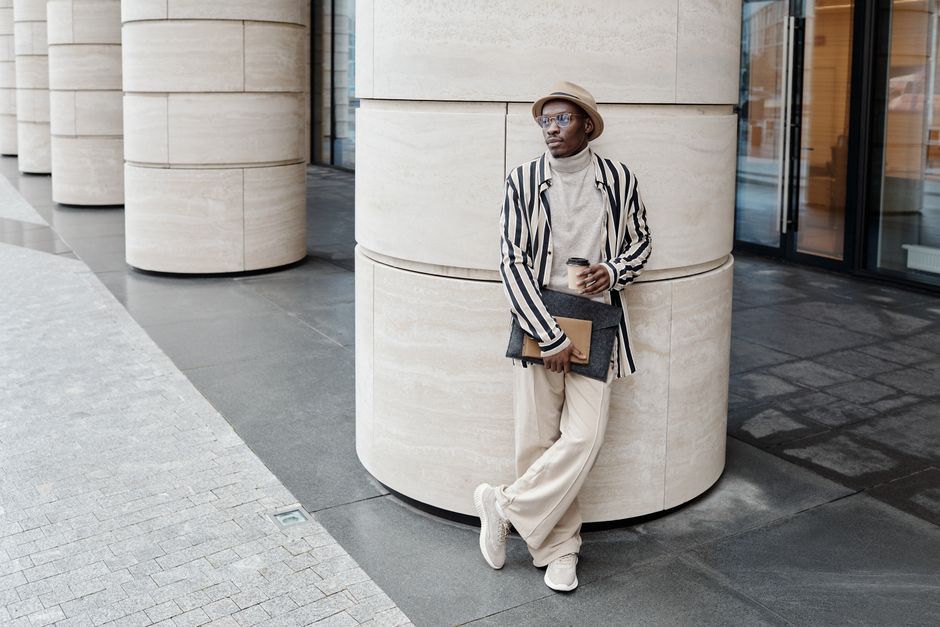
My pick for most offices is a tucked shirt, wide tailored trouser, and low pointed loafer. It looks polished without appearing styled for a formal event, and it survives a full day of sitting better than a stiff skirt suit.
- The meeting formula: Pair the COS Wide-Leg Tailored Trousers, commonly listed near $150, with a white poplin shirt, a navy blazer, and black pointed loafers. Keep the shirt tucked and the blazer ending around the upper hip. This is the strongest option for presentations, interviews, and offices with a conservative business casual standard.
- The desk-to-dinner formula: Use Aritzia Effortless Pant trousers, often priced around $148, with a fine-gauge crew-neck sweater and a slim leather belt. Add a low block-heel pump and small metal earrings. The drape keeps the outfit comfortable, while the tucked knit prevents it from looking loose.
- The relaxed-office formula: Try Uniqlo Pleated Wide Pants at a reference price near $49.90 with a fitted knit polo, cropped cardigan, and clean leather sneakers. Choose charcoal, navy, or stone rather than a loud print. This outfit suits workplaces where denim and sneakers already appear regularly.
- The warm-weather formula: Wear Banana Republic Factory Wide-Leg Trousers, often listed around $80, with a sleeveless knit shell and a lightweight single-button jacket. A leather loafer keeps the outfit grounded. The jacket is useful when air conditioning makes a bare-armed outfit feel too casual.
These examples show the useful rule: the wider the trouser, the more specific the top and shoe should be. For a clear winner, choose the first formula when you are unsure about the office dress code.
How Should You Choose Fabric, Length, and Waist Fit?
Fabric determines how wide-leg trousers behave after you leave the fitting room. A medium-weight wool blend, dense crepe, cotton twill, or smooth suiting polyester usually holds a stronger crease and resists the limp shape that makes wide trousers look casual. Very thin rayon can look elegant on a hanger but collapse around the hips after several hours. Linen offers excellent airflow, yet it creases quickly and may read too informal in a strict office. For a dependable work pair, choose fabric with enough weight to fall straight and enough recovery to avoid permanent seat wrinkles.
Fabric changes the message
Matte fabrics look more professional than shiny synthetic cloth. Pinstripes, subtle checks, and solid neutrals are easier to repeat across a workweek than large prints. Navy, charcoal, black, camel, and chocolate brown create more outfit options than bright seasonal colors. A black pair can look severe with a black blazer, so soften it with ivory, pale blue, or burgundy on top. A camel pair looks polished with cream but may need darker shoes to prevent the whole outfit from appearing washed out.
The COS Wide-Leg Tailored Trousers are a good example of a structured silhouette at about $150. The Aritzia Effortless Pant, around $148, gives a softer drape and works best when the top is tucked or cropped. The Uniqlo Pleated Wide Pants, around $49.90, are the budget pick, but their relaxed shape benefits from a neat jacket or firm knit. Prices vary by country, sale period, and fabric version, so treat these figures as reference points rather than fixed promises.
Take the final measurement
Measure the trousers while wearing the shoes you will use most often. For a flat loafer, the back hem should sit just above the floor. For a 2-inch heel, the hem can fall slightly lower, but it should never drag. Sit down before removing the tags. The waistband should remain secure without digging in, and the pleats should not pull open across the hip. Walk up stairs and check that the fabric does not twist around the leg.
Do not size up simply to gain a wider leg. That usually creates a loose waist, excess fabric at the seat, and a sloppy side seam. Buy the correct waist size and have the hem altered if needed. For most people, hemming is the alteration that produces the biggest improvement.
What Usually Goes Wrong With Wide-Leg Office Trousers?
Why do my trousers look messy instead of tailored?
The usual cause is excess length or a fabric that is too light for the width of the leg. Pin the hem temporarily at the height of your office shoe and reassess the silhouette in a mirror. If the trousers still collapse around the ankle, the problem is the fabric, not your styling.
Why does my outfit make me look shorter?
A long untucked top, strong color contrast, and a flat shoe can divide the body into short horizontal sections. Tuck the top, match the shoe closely to the trouser color, and choose a jacket that ends near the waist or upper hip. A high rise can help, but only when the waistband fits securely.
What should I avoid in a conservative office?
Skip cargo pockets, drawstring waists, distressed fabric, visible athletic branding, and hems that pool on the floor. Extremely low-rise trousers can also look less polished because they make tucked shirts bunch at the stomach. The clearest correction is to remove one casual feature at a time: replace the sneaker, add a blazer, or change the knit to a crisp shirt.
The best failure-mode rule is to inspect the outfit while seated, walking, and standing. Wide trousers need to work in motion, not only in a full-length mirror.
When Are Wide-Leg Trousers the Wrong Choice?
Wide-leg trousers are the wrong choice when your workplace requires a narrow, uniform silhouette, when you spend the day around machinery or crowded service areas where loose hems can catch, when the available pair cannot be hemmed cleanly, or when the waistband causes constant adjustment; a straight-leg trouser is the better purchase for those situations because it offers easier movement control and a simpler shoe line, and a slim ankle trouser is the better choice for a small wardrobe that must move from office meetings to active commuting without tailoring, while wide legs also deserve a pass when the only pair available has a thin, clingy fabric, exaggerated pooling, or a waistband that gaps at the back, since those details create more repair work than style value; this is not legal advice — consult a licensed attorney; the single most useful rule is to choose wide-leg trousers only when the waist fits firmly, the hem clears the floor, and the upper half gives the volume a clear shape.
Related Posts
Responsible Denim Brands: A No-BS Buying Guide
Responsible denim is not simply jeans made from organic cotton.…
Casual Korean Men’s Style: 5 Rules for Clean Outfits
Why Korean casual style looks balanced instead of sloppy The…
7 Spring Outfit Ideas for Weekend Getaways That Pack Well
A weekend bag exposes bad outfit planning fast: one cold…