Picture Saturday at noon. Your sequin top is sticking to both arms. Your new boots have already formed a blister the size of a 50p coin. You’re standing in a queue for the toilets holding a tote bag in each hand because your outfit has nowhere to put anything. This is not a hypothetical. This happens at every festival, to people who planned carefully and thought they were ready.
Festival outfit planning almost always focuses on aesthetics and almost never on function. That’s the gap this covers.
Why Festival Dressing Is a Different Problem Entirely
A regular outfit solves one question: does this look good? A festival outfit has to answer five simultaneously. That’s why so many carefully planned looks fall apart before the headliner even starts.
Here’s the honest breakdown of what your outfit is actually competing against:
| Challenge | What It Actually Means | Most Common Failure |
|---|---|---|
| Weather shifts | UK festivals: 10°C morning, 22°C afternoon, cold again by midnight | Single-layer outfits with no warm option packed |
| Terrain | Grass, mud, gravel, and crowds — often in the same hour | Wrong footwear chosen for looks, not conditions |
| Duration | 12–14 hours of continuous wear, standing, and dancing | Anything that requires constant readjustment |
| Three-day use | Same bag, same jacket, three distinct looks | Planning one great look and winging the rest |
| Storage | Carrying keys, phone, cash, sunscreen — where? | No pockets, no plan, constant fumbling |
Get three or four of these right and you’ll have a good weekend. Miss two or more and your outfit becomes the story you’re telling when you get home — not in a good way.
The Climate Factor Most People Skip
UK and Northern European festivals (Glastonbury, Reading, Download, Leeds) need a fundamentally different approach to dry-heat festivals like Primavera Sound Barcelona, Coachella, or Bestival Majorca. UK festival planning has to assume mud and cold evenings. A sheer mesh top with nothing underneath it is perfect at a Mediterranean festival in July. At Worthy Farm in June, it’s a cold, wet mistake by 8pm. Check the historical weather data for your specific festival location before building your look.
Why Three Planned Looks Beat One Perfect Look
Most people build one standout outfit for day one and improvise the rest. Day one looks great. Days two and three are stressful and messy. Plan three looks before you pack. They can share pieces — the same boots, the same jacket — but each day needs a thought-out base. Thirty extra minutes of planning saves hours of frustration on site.
The Rules That Keep Any Festival Outfit Together

Before getting into specific pieces and brands, these are the principles that separate outfits that last from outfits that don’t. No products — just logic that applies regardless of your budget or style.
Build in a removable layer. Morning cold, afternoon heat — the layer solves both. A denim jacket, a crochet cardigan, a flannel tied at the waist. Something you can strip off and stuff into a bag without destroying the overall look underneath.
Build for movement, not photography. The two aren’t the same. An outfit that photographs beautifully in a car park might be impossible to dance in for six hours straight. Before packing anything, ask one question: can I wear this for 12 continuous hours without touching it? If the answer is no, it’s not a festival outfit.
Pockets are not optional. Neither is a bag that stays secured to your body while you move. The number of phones, wallets, and keys lost at festivals every year because someone’s outfit had nowhere to put them is staggering. A crossbody bag that sits against your hip, a bum bag, a jacket with internal zip pockets — have a solution before you arrive, not after you’ve already lost something.
Test everything before the festival. This applies to boots, bra, waistbands, everything. Anything untested for extended wear is a liability. A few hours of home testing saves you from discovering a problem in the middle of a 60,000-person crowd.
Footwear Is the Decision That Decides Everything Else
This gets its own section because it matters that much. Wrong footwear at a festival will end your weekend. No exaggeration.
UK and Wet-Ground Festivals
Hunter Original Tall Wellies (£125) have been the standard for 20 years because they actually work. Genuinely waterproof, durable enough for repeated festival use, and available in enough colorways to integrate with real outfits rather than fighting them. Budget supermarket alternatives at £15–£25 look identical in the shop and rub blisters within four hours of field walking.
If you hate wellies: Doc Martens 1460 eight-hole boots (£155) are the serious alternative. Leather, water-resistant when treated, and genuinely comfortable once broken in. The broken-in part is non-negotiable. New Doc Martens worn for the first time at a festival are how people end up limping out on day two. Break them in over at least three weeks of daily wear before committing.
Dry-Ground and Sun Festivals
For dust-and-heat festivals: Birkenstock Arizona sandals (£80) or New Balance 550 trainers (£90–£110). The Birkenstocks need a break-in period too. The New Balance 550s are practical enough to survive a full day on your feet and understated enough to work with most festival aesthetics without looking too sporty.
The Rule With No Exceptions
Never wear new shoes to a festival. Whatever the shoe. Whatever the justification. This rule has no exceptions.
Where to Actually Shop for Festival Pieces

Knowing which category you need is useful. Knowing exactly where to find it at the right price is more useful.
ASOS Festival Edit
The most practical starting point. ASOS runs a dedicated festival section every spring covering co-ord sets, crochet tops, mesh pieces, and accessories. Most pieces land between £18 and £55. Quality is inconsistent on structured pieces — check return rates before buying anything boned or fitted — but for lightweight, single-season items, the price is right and next-day delivery removes the panic of late planning.
Free People
More expensive at £60–£180 per piece, but noticeably better construction. Their floral maxi dresses, crochet cardigans, and embroidered denim jackets are the pieces you’ll still own in three years. The practical strategy: buy one Free People anchor piece, usually the jacket or main dress, and build cheaper pieces around it. Their Movement range also has festival-appropriate active styles that photograph well and actually hold up to long wear.
House of CB
Specifically strong for co-ord sets and corset-style bodices that stay in place during extended wear. Festival co-ord pieces typically run £55–£95 and are constructed well enough for repeated use. The House of CB Emery bandeau co-ord and the Mirabella satin set are popular festival choices for a reason — structured enough to hold their shape, distinctive enough to stand out. Size up on anything with a tight bodice if you’re planning to be active in it all day.
Beyond Retro
Vintage and second-hand, with stores across London and a strong online selection. For denim jackets, band tees, and one-of-a-kind statement pieces, Beyond Retro is hard to beat at the price. Vintage denim jackets run £25–£45 here. Nothing else in that range comes close for quality or character. The selection changes constantly so you can’t plan specific pieces in advance, but if you have a week before a festival and access to a store, the results are usually better than buying new at twice the price.
Nasty Gal
Good specifically for sequin pieces, glitter two-pieces, and maximalist statement sets. Their sale section regularly hits 40–60% off, making a sequin co-ord that retails at £60 available for around £25. Don’t buy their shoes — the quality isn’t there. Do buy their statement tops and sets if you want high visual impact at a cost you can live with if it gets ruined by day two.
The Stack Formula That Removes All the Guesswork
Build every festival outfit as a four-layer stack: base layer, main piece, statement layer, outerwear. Every layer should work with the one below it. This approach solves the temperature problem, the weather problem, and the “I don’t know what to wear tomorrow” problem simultaneously.
That’s it. Not complicated. The difficulty is doing it three times before you pack, not improvising it at the campsite at 11am.
The Specific Mistakes That Ruin Weekends
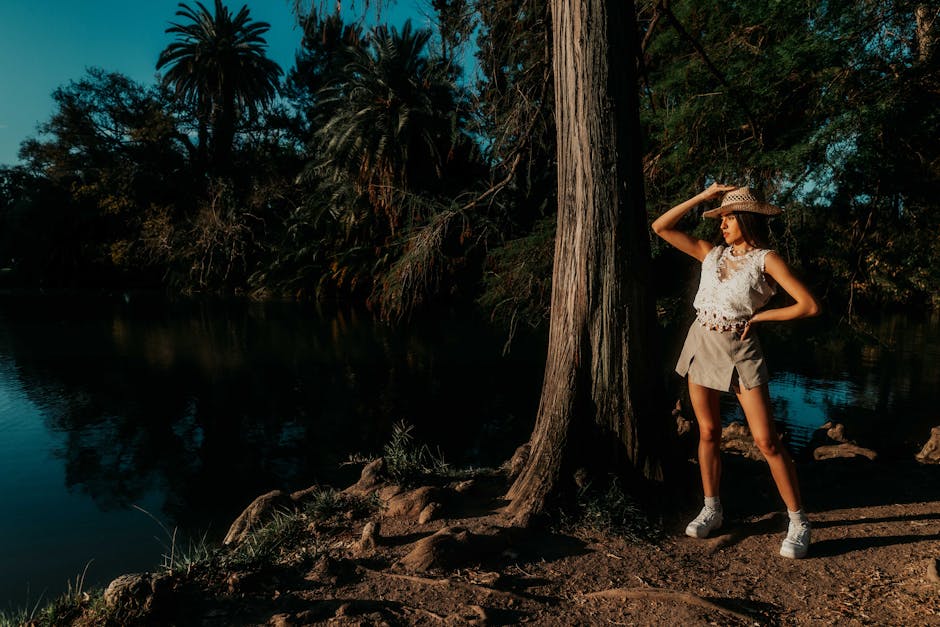
Not vague warnings — actual mistakes with actual consequences.
- Buying new boots specifically for the festival. Already covered above, but worth repeating because people still do it. Blisters, tendon strain, ruined weekend. The only mistake on this list that is completely irreversible once you’ve made it.
- Outfits built for photos, not for living in. Oversized hats that block people’s sightlines at stages. Trailing hems that collect mud and trip you on uneven ground. Corset lacing that cuts in when you sit down. These are Instagram outfits, not festival outfits. One is not the other.
- No storage solution. If your outfit has no pockets, you need a Baggu Fanny Pack (around £38) or a Carhartt Hip Bag (around £45) — something that secures to your body and stays there while you’re moving. Tote bags get left on the ground. Clutches get dropped in mud. Have a hands-free answer before day one.
- Packing only for best-case weather. UK festival weather is historically unpredictable. A packable Uniqlo Ultra Light Down jacket (around £60) takes up almost no space and covers you if the temperature drops 15 degrees overnight — which at Glastonbury it can and does.
- Dressing for the wrong festival type. A sheer co-ord and platform sandals at Download or Bloodstock will make you miserable in ways that go beyond weather. Denim, broken-in boots, band tees — that’s the correct language for a metal festival. Boho florals and crochet belong at Latitude or Green Man. Research the actual vibe of your specific event before building your look around it.
- Wearing white at a UK mud festival. You already know this. You’ll do it anyway. White at a dry festival: fine. White at Glastonbury: a £35 experiment in how many shades of brown exist.
Festival Outfit Questions Answered Without Hedging
Are co-ord sets worth buying for festivals?
Yes. They remove decision-making at 7am when you’re half-asleep and navigating a campsite. A co-ord gives you a complete, pre-planned look with zero morning effort. PrettyLittleThing crochet two-pieces (£35–£50) and the House of CB structured sets are both solid depending on your preferred aesthetic. One co-ord per day eliminates your morning routine entirely.
What’s a realistic budget for a festival wardrobe?
For a 3-day festival, assuming you already own basics: £100–£160 for new pieces. This covers decent footwear if needed (don’t cut corners here), two or three new statement pieces, and a bag solution. Spending over £200 only makes sense if pieces have clear life outside the festival. Spending under £70 almost always means compromising on footwear — which is the one compromise that costs you most.
Should you rent festival outfits instead of buying?
Rent anything extremely specific that you won’t wear again — a full sequin jumpsuit, elaborate headwear. Hurr and By Rotation both offer fashion rental at reasonable rates. Buy anything with dual use: denim jackets, boots, co-ords that split into individual everyday pieces. The decision is straightforward: will you wear this outside of one festival? Yes — buy it. No — rent it or buy cheap and accept the loss.
Can you build a decent festival outfit on a very tight budget?
Yes. Depop and Vinted for denim pieces and co-ords, Beyond Retro for jackets, ASOS sale for new statement items. The one area not to cut: footwear. Cheap wellies and cheap boots mean foot problems that can’t be fixed mid-festival. Everything else can be sourced secondhand or on sale without serious consequence.
Back to that Saturday at noon in the field — the people having a good time are wearing broken-in boots, a layered outfit with somewhere to put their phone, and at least one piece they didn’t buy two days ago. The ones struggling made exactly the compromises above. The gap between a good festival weekend and a miserable one is almost entirely outfit-related, and almost entirely preventable.
Related Posts

Everlane Vs Uniqlo Basic Tees: 5 Basic Tee Myths: Everlane vs Uniqlo for Capsules
Everlane and Uniqlo tees compared by price, fit, and fabric…
Festival Outfits Colourful: How to Build a Standout Look That Lasts
Most colourful festival outfits look amazing in the dressing room…

Black Skinny Jeans Dinner Outfit: Accessories That Make It Evening Ready
Black skinny jeans become dinner-ready when the accessories add polish,…