Here is the problem: most men think “casual” means no rules. They wear faded gym shorts, a wrinkled t-shirt from a 5K run in 2018, and sneakers that have seen better days. Then they wonder why they look sloppy at brunch, at the office on Fridays, or on a date.
The truth is that casual dress codes have rules. They are just different rules than business formal. Ignore them, and you broadcast that you did not try. Follow them, and you look effortlessly put-together without looking like you are heading to a board meeting.
This guide covers the actual mechanics of casual dressing for men in 2026. No fluff. No vague advice. Just specific fit guidelines, fabric choices, and outfit structures that work.
What Casual Actually Means (And What It Does Not)
The word “casual” gets thrown around so much it has lost meaning. A wedding invitation says “casual attire” and half the guests show up in jeans and a polo, the other half in linen trousers and a blazer. Both groups think they followed the instructions.
Here is the working definition: casual means no tie, no structured jacket required, and relaxed fabrics are acceptable. It does not mean no thought, no fit consideration, or no quality.
Casual sits on a spectrum. On one end, you have active casual — gym shorts, hoodies, running shoes. This is for the grocery run or a morning coffee. On the other end, you have smart casual — chinos, a button-down shirt, leather loafers. This is for dinner out, a casual office, or meeting a partner’s parents for the first time.
The mistake most men make is treating all casual situations as active casual. They wear the same outfit to a brewery that they wear to mow the lawn. That is the failure mode.
A simple rule: if you would not wear it to a casual restaurant that charges more than $20 per entrée, it is too sloppy for smart casual.
The Three Variables That Define Casual
Every casual outfit comes down to three things: fit, fabric, and footwear. Change any one of these, and the entire outfit shifts from sloppy to sharp or vice versa.
Fit: Casual does not mean baggy. A t-shirt should skim the chest and shoulders without pulling. Sleeves should end around mid-bicep. Pants should have a straight or slim-straight leg — not painted on, not pooling at the ankles.
Fabric: Casual fabrics are soft and unstructured. Think cotton, linen, jersey, oxford cloth, and washed denim. Avoid anything with a sheen — satin, poly-blend suits, or overly crisp dress shirts. Those signal formal, not casual.
Footwear: Shoes make or break casual. Clean white sneakers work. So do loafers, desert boots, and boat shoes. Avoid running shoes with mesh, hiking boots with jeans, or any shoe with a visible athletic logo unless you are actually exercising.
The Five Outfits That Cover Every Casual Situation

You do not need a closet full of clothes. You need five reliable outfits that cover 90% of casual scenarios. Here they are, built from specific pieces you can buy today.
| Situation | Top | Bottom | Footwear | Outerwear (optional) |
|---|---|---|---|---|
| Weekend coffee / errands | Heavyweight t-shirt (cotton, 6+ oz) | Dark wash jeans, straight leg | Clean white sneakers (e.g., Adidas Stan Smith) | Denim jacket or hoodie |
| Casual office / Friday | Oxford cloth button-down (OCBD) | Chinos, khaki or navy | Loafers or derby shoes | Cotton sweater or unstructured blazer |
| Dinner out / date | Linen or cotton button-down, untucked | Dark wash jeans or wool trousers | Leather loafers or Chelsea boots | Lightweight bomber jacket |
| Outdoor event / picnic | Polo shirt (pique cotton, not jersey) | Cotton chino shorts, 7-9″ inseam | Boat shoes or canvas sneakers | Linen overshirt |
| Travel / long day | Merino wool crewneck sweater | Stretch chinos or travel pants | Minimalist leather sneakers | Field jacket or parka |
The key is that each outfit has a clear top, bottom, and shoe that belong together. Mixing a formal dress shirt with gym shorts is a mismatch. So is a polo with dress trousers. Keep the formality level consistent across all three pieces.
Footwear Rules That Separate Sharp From Sloppy
If you want to know whether a man understands casual dressing, look at his shoes. They are the single biggest indicator of effort and taste.
Here is the first rule: no athletic shoes outside of athletic contexts. This is not about being a snob. It is about visual language. Running shoes communicate that you just finished a workout or are about to start one. They do not communicate that you thought about your outfit.
The second rule: leather always elevates. A pair of brown leather loafers costs $100–$200 from a brand like Bass or Cole Haan. They will last years. They work with jeans, chinos, and even some tailored trousers. They make any outfit look intentional.
Third rule: sneakers can work, but they must be clean and minimal. The Adidas Stan Smith, the Common Projects Achilles Low, or the Veja Campo are all examples of sneakers that look deliberate. They have clean lines, no giant logos, and no bright colors. They cost more than a pair of Nikes, but they look like you made a choice.
A common failure mode: wearing new, stiff sneakers with a formal outfit. If you wear sneakers, they should look slightly worn in. Crisp white sneakers with a suit look like a costume. Slightly scuffed white sneakers with chinos and a blazer look like style.
When to Wear Boots
Chelsea boots and chukka boots (desert boots) are the most versatile casual footwear for men. A pair of Clarks Desert Boots in beeswax leather ($90–$120) works with jeans, chinos, and corduroys. They read as casual but intentional. They also handle weather better than sneakers or loafers.
Avoid work boots (Timberland, Red Wing) unless your actual job involves construction. They are heavy, clunky, and make every outfit look like you just got off a job site. If you want boots, go with a slim-profile Chelsea or chukka.
Fabric and Fit: The Two Things That Can Ruin Any Outfit

You can follow every rule about what to wear and still look terrible if the fit is wrong or the fabric is cheap. These two variables override everything else.
Fit guidelines for casual tops:
- T-shirt shoulder seam should sit exactly at the edge of your shoulder bone. Not dropping down your arm. Not pulling up toward your neck.
- Button-down shirts: the collar should button without gaping. You should be able to fit two fingers between your neck and the collar when buttoned.
- Sleeve length for button-downs: the cuff should end at the base of your thumb when your arms are down. For t-shirts, sleeves should end at mid-bicep.
- Shirt hem: untucked shirts should end at the middle of your zipper fly, not below your crotch.
Fit guidelines for casual pants:
- Waist: you should not need a belt to keep pants up. The belt is an accessory, not a necessity.
- Length: pants should have a slight break at the front — one fold of fabric resting on the shoe. No pooling, no flooding (showing ankle unless intentional).
- Leg opening: for straight-leg pants, the leg opening should be wide enough to fit over your shoe but not so wide that it drags on the ground. For slim-straight, the opening should be just wide enough to slide on and off without unbuttoning.
Fabric quality signals:
Cheap fabric wrinkles instantly, pills after three washes, and loses shape. Good fabric holds its structure and feels substantial.
For t-shirts, look for 100% cotton with a weight of at least 6 ounces per square yard. Brands like Uniqlo’s Supima Cotton tees ($15) and Everlane’s heavyweight tees ($28) hit this mark. Anything lighter than 5 ounces will look flimsy and sheer.
For chinos, look for 100% cotton twill with a weight of 8–10 ounces. Dockers Alpha Khakis ($50–$70) are a reliable entry point. Bonobos ($90–$120) offers better fits for athletic builds. Avoid anything with more than 2% elastane — stretch fabric looks cheap and bags out at the knees.
For denim, look for raw or washed selvedge denim in 12–14 ounce weight. Unbranded Brand ($80) and Naked & Famous ($150) are solid options. Avoid pre-distressed denim with fake whiskering or holes. Clean, dark wash denim is more versatile and ages better.
The One Mistake That Undermines Every Casual Outfit
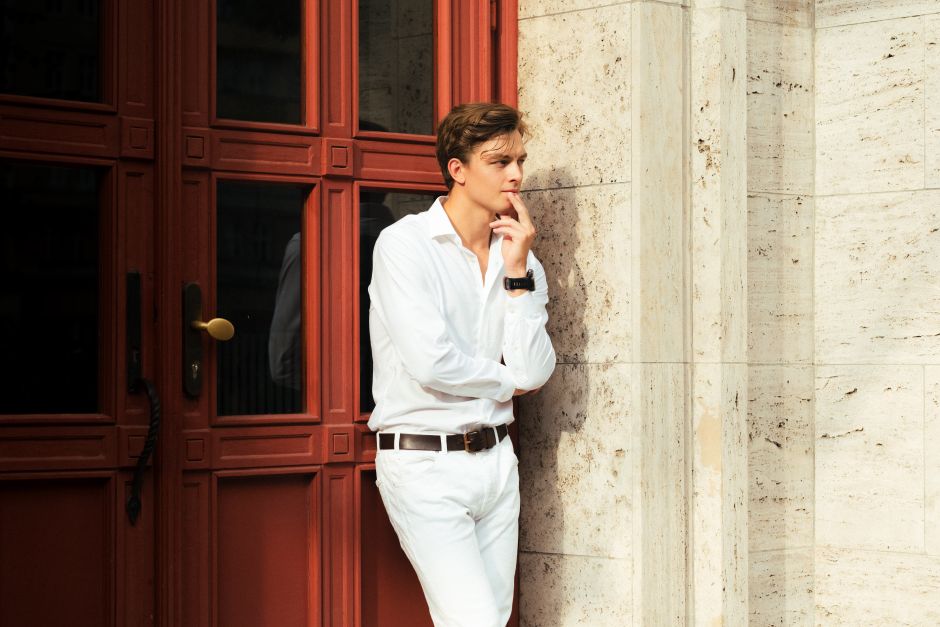
There is one mistake that makes every casual outfit look worse, regardless of how much you spent on clothes: wrinkles and stains.
Casual does not mean unkempt. A wrinkled linen shirt is acceptable. A wrinkled cotton t-shirt is not. A coffee stain on the cuff of a button-down reads as carelessness.
Here is the practical fix: iron your shirts. Or steam them. Or at minimum, hang them in the bathroom while you shower to release wrinkles. It takes two minutes. It changes how people perceive you.
Second mistake: wearing clothes that are too new. A stiff, never-washed denim jacket with creases still in the sleeves looks like a costume. Break in new clothes before wearing them out. Wash them once. Wear them around the house for an afternoon. Let them settle.
Third mistake: ignoring the weather. Wearing a heavy cotton sweater in 80-degree heat makes you look like you do not understand your environment. Linen and lightweight cotton exist for a reason. Dress for the temperature, not just the occasion.
Fourth mistake: over-accessorizing. A casual outfit can handle one or two accessories — a watch, a leather bracelet, a simple necklace. It cannot handle a watch, a bracelet, a necklace, a belt with a giant buckle, sunglasses on the collar, and a baseball cap. Pick two items max. Let the clothes do the work.
The bottom line: casual dress codes are not a free-for-all. They are a structured system with clear rules about fit, fabric, and footwear. Follow the guidelines above, and you will look sharp in any casual setting. Ignore them, and you will look like you gave up before you started.
Related Posts

Preppy Outfits YouTube: The 5 Channels That Actually Teach the Look
Most people searching for preppy outfits on YouTube end up…

How To Choose Statement Accessories That Make Simple Outfits Work
Statement accessories can rescue a plain outfit, but only when…

Black Skinny Jeans Dinner Outfit: Accessories That Make It Evening Ready
Black skinny jeans become dinner-ready when the accessories add polish,…