A jacket sleeve should usually leave about 0.25 to 0.5 inch of shirt cuff visible. That small measurement can decide whether a formal outfit looks tailored or borrowed. Picture the common problem: you have a wedding, interview, dinner, or presentation in three days, but your current jacket pulls across the buttons, hangs past your knuckles, or looks too casual beside polished dress trousers. The answer is not simply buying the most expensive blazer. It is choosing the right structure, fabric, color, and alteration path.
What makes a blazer formal enough for dress occasions?
Start with structure, not decoration
A formal blazer earns its place through shape. Look for a clean shoulder line, a firm chest, a smooth lapel roll, and enough length to cover most of the seat. A two-button, single-breasted jacket with a notch lapel is the safest choice for interviews, evening dinners, graduations, and office events. Peak lapels add authority, but they can look too dramatic on a soft, unstructured jacket. Patch pockets also push a blazer toward casual territory, while flap or jetted pockets look more polished.
The jacket should close without strain. When the top button forms an X-shaped pull, the chest is too small or the jacket is too slim. When the lapels bow away from the chest, the jacket may be too tight or poorly shaped. A formal dress men blazer should create one long line from shoulder to hem rather than cling to the stomach.
Choose cloth that holds its line
For the widest use, choose smooth worsted wool in navy, charcoal, or deep gray. A Super 110s to Super 130s wool offers a refined surface without becoming so delicate that everyday wear creates worry. A wool blend with 2% to 3% stretch can help during travel, but too much synthetic fiber often gives the jacket a shiny surface and weaker drape.
Skip velvet, linen, heavy tweed, bold checks, and bright metallic buttons when the event calls for formal dress. Those fabrics can look excellent, but they communicate a different level of informality. The clear verdict: a dark navy or charcoal wool blazer with a two-button front is the most reliable formal option for a man building one useful jacket.
How to measure for a men’s blazer before buying

Use five measurements that predict fit
Do not trust the chest number alone. Measure a jacket that already fits well, or ask a tailor to measure you in a shirt you would wear under the blazer.
- Chest: Measure around the fullest part, keeping the tape level and loose enough for one finger underneath.
- Shoulder: Measure from the end of one shoulder seam to the other. This is the hardest area to alter.
- Sleeve: Measure from the shoulder seam to the wrist bone. Aim to show 0.25 to 0.5 inch of shirt cuff.
- Jacket length: Stand naturally and check that the hem covers most of the seat without reaching the knees.
- Waist closure: Button the jacket while standing. It should close flat without a deep wrinkle radiating from the button.
Fix the details in the right order
Shoulders come first, chest second, sleeves and body length after that. A tailor can usually shorten sleeves, adjust the waist, and make modest changes to the jacket length. Enlarging a jacket is limited by the fabric left inside the seams. Shoulder width, armhole shape, and a badly placed button are expensive or impossible to repair cleanly.
Try the blazer with the exact shirt and trousers you plan to wear. Raise both arms, sit down, and reach forward. If the back rides sharply upward or the armholes cut into your underarms, the pattern is wrong for your body. The strongest buying rule is simple: accept a slightly loose waist that a tailor can shape, but reject tight shoulders and a strained chest.
Which formal blazers offer the clearest value?
Current options by fabric, price, and use
Prices change with color, size, and sale timing, so treat the figures below as listed reference prices rather than promises. The fabric and construction matter more than a temporary discount.
| Blazer | Listed price | Fabric and details | Best use |
|---|---|---|---|
| Bonobos Jetsetter Stretch Wool Suit Jacket | $450 | 97% wool, 3% stretch; two-button front; double vents | Travel and long formal days |
| J.Crew Ludlow Slim-fit Suit Jacket | $550 | Italian worsted wool; slim silhouette; navy and charcoal options | Office and interviews |
| Suitsupply Tailored Fit Havana Blazer | $399 | 100% wool; Reda mill fabric; tailored fit | Formal separates |
| Massimo Dutti 100% Wool Textured Blazer | $420 | Textured wool; softer, less strict finish | Dinners and smart events |
The practical winner depends on the wardrobe gap
For one blazer that must cover interviews, business dinners, and formal daytime events, the J.Crew Ludlow in navy is the clearest pick because smooth worsted wool and a restrained silhouette work across the most settings. For frequent flyers, the Bonobos Jetsetter earns its higher price through 97% wool, 3% stretch, and a four-season construction. For a more tailored European shape, choose the Suitsupply Havana, especially if in-store alterations are available.
Do not buy the Massimo Dutti textured wool option for a strict business interview. Its texture makes it more relaxed. It is a strong dinner jacket, not the safest corporate uniform.
Why fit beats brand when a blazer looks expensive

Prioritize the shoulder and collar
The shoulder is the deal-breaker. A famous label cannot rescue a shoulder seam that sits beyond your natural shoulder or collapses before it reaches the arm. The collar should rest against the back of your neck with no visible gap. If the collar stands away when you turn your head, the jacket may have the wrong balance, the wrong posture adjustment, or a shoulder that is too wide.
Check the lapels next. They should lie flat against the chest and remain smooth when the jacket is buttoned. A lapel that breaks sharply near the button often signals a tight chest. A lapel that looks flat and lifeless may point to poor pressing or a very soft construction.
Know which mistakes cost more than the blazer
Buying a jacket that is two sizes too small is the most common expensive mistake. So is choosing a short fashion cut for a formal event because it looks sharp on a product photo. The camera hides the missing length, while real trousers expose it when the jacket hem sits several inches above the seat.
Another mistake is wearing a suit jacket as a blazer without checking the trousers. A jacket from a matching suit can work with gray trousers, but only when the colors and textures create enough contrast. Black suit jackets often look disconnected with navy trousers. A navy jacket with medium-gray wool trousers is safer.
The verdict is firm: spend less on the label and reserve money for alterations. A $400 jacket with a $75 sleeve and waist adjustment can look better than an untouched $900 jacket with poor shoulder fit.
Formal blazer questions men ask before an event
Can a black blazer replace a navy blazer?
Not for most daytime formal occasions. Black reads more severe and can resemble eveningwear, service wear, or an incomplete suit. Choose black for cocktail events, funerals, black-tie-adjacent dinners, or occasions that specifically request it. For interviews, graduations, business dinners, and weddings, navy gives you more shirt and trouser options while still looking formal.
Can you wear a blazer without a tie?
Yes, but the shirt and collar must carry more of the outfit. Wear a crisp white or pale-blue shirt with a firm spread or semi-spread collar. Keep the top one button open, not two, and use polished leather shoes. A tie-free outfit looks intentional when the blazer has a clean lapel, the shirt is pressed, and the trousers have a sharp crease. It looks unfinished when the shirt is soft, wrinkled, or too casual.
Should a formal blazer be slim or regular fit?
Choose the narrowest fit that lets you sit, reach, and button the jacket without pulling. Slim fit is not the same as tight fit. A regular fit can look more formal when it leaves a clean line through the chest and waist. The correct choice is the one that keeps the lapels flat and the back smooth, then receives minor tailoring.
How to style one blazer for three formal dress codes
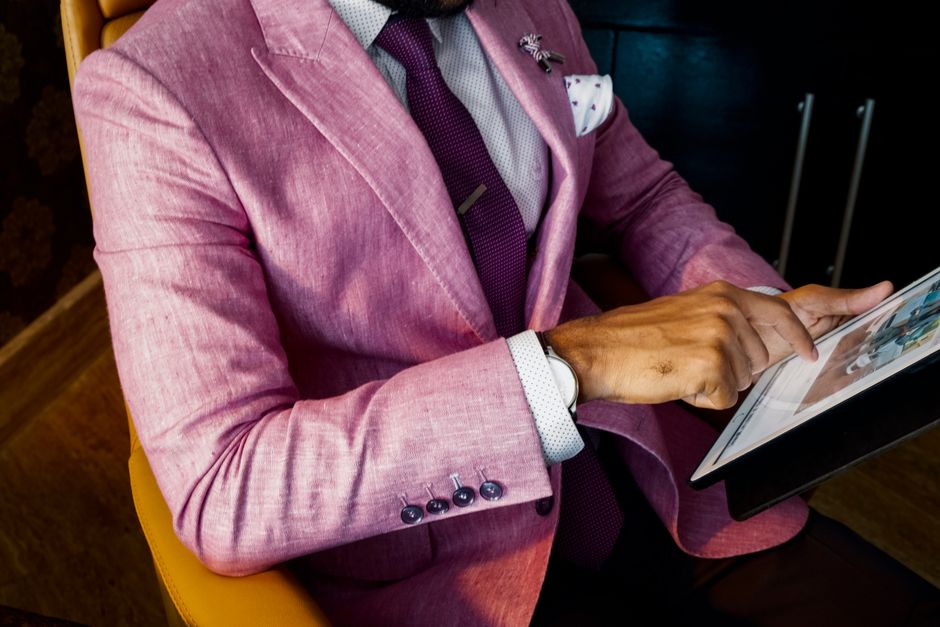
Use the shirt, trouser, and shoe combination to set the level
A navy wool blazer becomes more formal with a white poplin shirt, charcoal trousers, a burgundy or navy tie, and black cap-toe Oxford shoes. This is the strongest combination for an interview or conservative office event. A pale-blue shirt softens the result without making it casual.
For a wedding or dinner, keep the navy blazer but switch to medium-gray trousers, a white shirt, a textured silk tie, and dark-brown brogues. A white pocket square folded into a narrow rectangle adds polish without creating a loud focal point.
For a relaxed formal event, pair the jacket with gray flannel trousers, a fine-gauge merino knit tie, and dark loafers. Avoid jeans if the invitation says formal. They change the outfit’s message too sharply, even when the blazer is expensive.
Build a simple event-day check
- Remove every brand tag from the sleeve and pocket.
- Keep the jacket buttoned while standing and unbutton it when sitting.
- Check that the trouser break is clean and does not pool over the shoe.
- Match the belt leather to the shoe leather.
- Steam light wrinkles, but never press a shiny iron directly onto wool.
- Carry a spare shirt if the event lasts more than six hours.
Do not buy a formal blazer when the invitation actually calls for a complete matching suit or tuxedo. In that case, a separate jacket may look underdressed. For every other dress occasion, one well-fitted navy wool blazer gives the strongest return because it combines a formal shape with enough flexibility to work beyond a single event.
The single most important takeaway: choose a navy wool blazer with correct shoulders and a clean chest, then spend the remaining budget on precise alterations.
Related Posts
J.Crew Regent Vs Banana Republic Sculpted-Fit Blazer: J.Crew Regent vs Banana Republic Sculpted-Fit: Power Dressing
A surprising fact about power dressing: people usually read shoulder…
Fossil Vs Mvmt: Fossil vs. MVMT: The Better Buy for Value and Style
A $20 price gap can make two quartz watches look…

Casual Korean Men’s Style: 5 Rules for Clean Outfits
Why Korean casual style looks balanced instead of sloppy The…